My McLaren Chronicles
I’ll admit right up front that I do not have a ton of experience with McLaren road cars, as I have only driven one. More on that later. I am, however, very familiar with the McLaren Formula 1 team, as my all-time favorite driver, Ayrton Senna, won his 3 World Championships with them.
Most people don’t realize the significance of McLaren’s Formula 1 history, and what it has to do with their road cars. Ferrari is the car company that it is today largely because of their involvement and success in Formula 1 racing. It is their dedication to winning in the sport that makes their road cars what they are today. The only other company that has a similar history, albeit not quite as successful, is McLaren. I would dare refer to McLaren as the Ferrari of the United Kingdom, although I am sure McLaren would take great offense to that. Having extensive experience with Ferraris, I have come to the conclusion that it is their experience in Formula 1 that they are able to translate to their road cars that give them their unique feel, a feel that I have not experienced in any other brand of car. You can feel it even in their older cars.
One major difference in their Formula 1 ventures is that Ferrari designs and builds their entire car, whereas Mclaren employs the use of other manufacturers’ engines. Right now, they are making a go with Honda, whom have returned to the sport after many years away from it. Honda and McLaren had a very successful partnership back in the late ’80s/early ’90s, as this is the engine that propelled Senna to all 3 of his World Championships. They certainly have their work cut out for them now though, as any time away from the sport makes it very difficult to catch up.
McLaren’s first significant road car was the F1. Introduced in 1992, and designed by the legendary Formula 1 designer, Gordon Murray, it was powered by a BMW V-12 that produced in excess of 600bhp. The performance numbers that the F1 generated were astonishing. So much faster than anything the world has ever seen on the street before it. The F1 was produced in very limited numbers, yet they had a lot of trouble finding homes for them. Even though that was the case, current values for F1s have absolutely skyrocketed. I know that they were originally offered for south of the million dollar mark, but are now commanding in excess of $10 million! Not a bad investment for a car.
Gordon Murray really stressed the details. Every single component of the car was uniquely designed for its mission. One very cool feature of the F1 is the central driver’s seat. I would absolutely love to experience driving one. The one statistic that really blew me away for the day was the 6.3-seconds to 100mph. This was far faster than anything I had ever read about. Sadly, I have never even seen one in person.
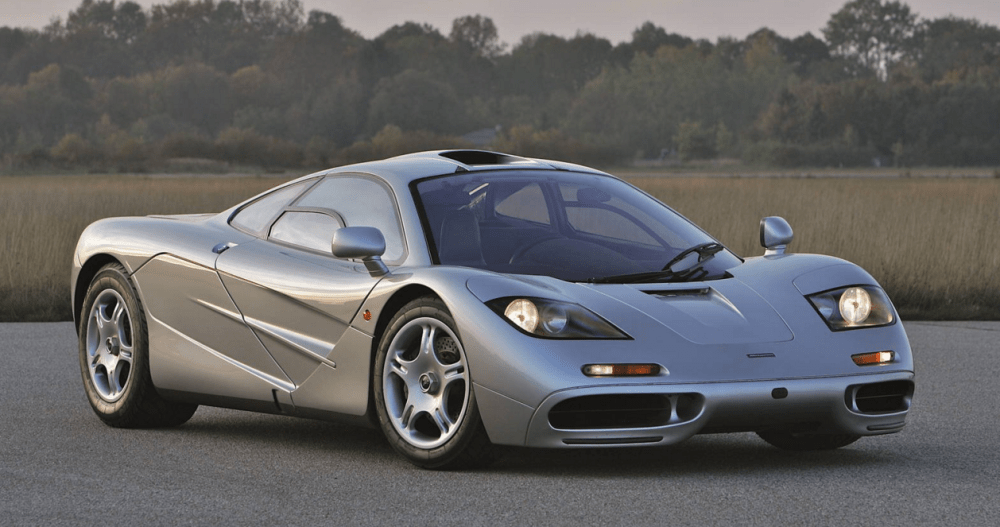
McLaren F1
Fast forward to current day. McLaren now has a lineup of cars, all mid-engined, that are fighting for the top exotic car spots right alongside Ferrari. Their lack of regular road car production experience has them lagging behind, in my opinion, but they are still ahead of everyone else, and yes, that includes Lamborghini.
I had a Ferrari customer who bought a pre-owned MP4-12C, which was a model that was launched in 2012. Unlike the Ferraris of that day, McLaren decided to go the turbo route, whereas Ferrari stuck to natural induction. This was one of the biggest differences between the two manufacturers’ philosophies. Personally, I like normally-aspirated motors over forced induction, as i feel that forced induction is sort of like cheating. Sadly, current and future regulations are pushing Ferraris to utilize turbos, which started with their California T model. That was a sad day for me to hear that this was the route that Ferrari was now taking.
One cool thing about having been in the Ferrari sales world is that so many customers really valued my opinion on their other brands of cars. This one customer with the MP4-12C was itching to get me in it, so he came by the dealership one day so that I could drive it. What I found is that it is a tad more extreme than Ferrari’s mid-engine V8 of the day, the 458, in every way. Getting in and out was a little tighter. The steering was heavier, as was pulling the paddle shifters. The brake pedal required more effort as well. For me, the car’s character was perhaps midway between the 458 and the 458 Speciale. It had its own unique feeling, and was fun to drive, but I certainly would not want to drive it for much more than a half hour, let alone take it on a weekend road trip – something I would not hesitate doing in the 458.
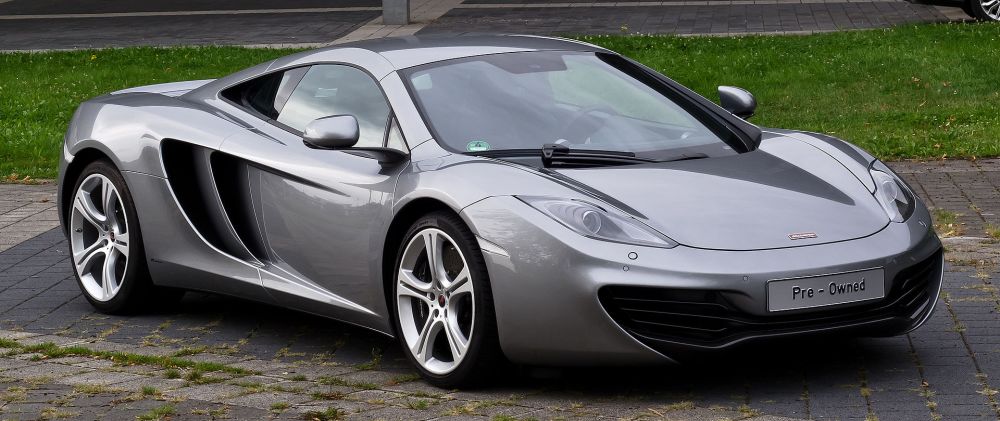
McLaren MP4-12C
Values on used MP4-12Cs and models that came after it have not been very impressive, Great for the person looking to buy one used!
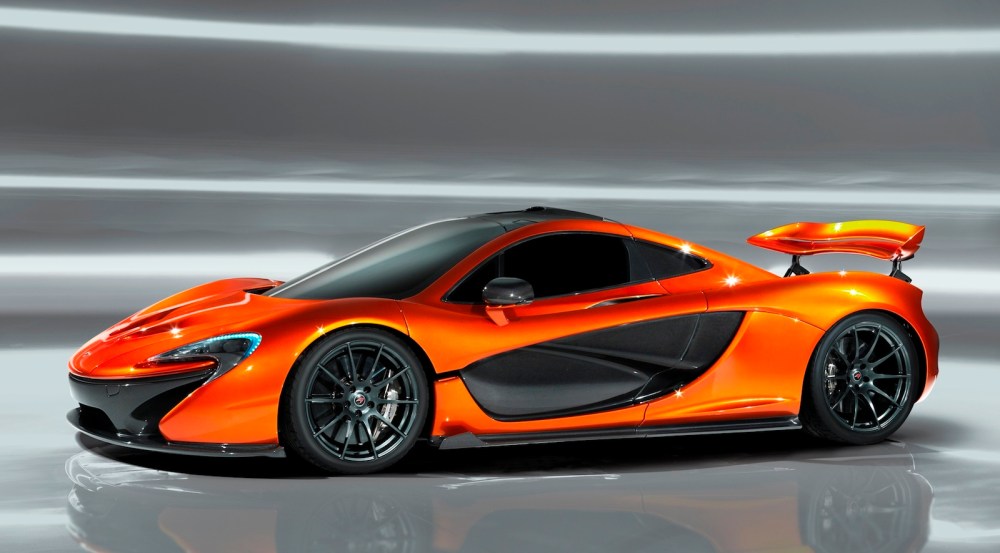
McLaren P1
They have since introduced a successor to the very legendary F1, called the P1. As you would expect, the performance was elevated to modern time supercar levels. It’s a cool car as well, but for me, it lacks a lot of the desirability that the F1 still possesses. I think a major part of why that is so for me is Gordon Murray. The F1 was his pet project, and he instilled every ounce of what he could from Formula 1 into it. The P1 obviously is still a McLaren, but it doesn’t have a name like Gordon Murray’s attached to it. I would still love to drive a P1 though!
 Danny' s Motor World Plus